
Gymnastics Levels Explained
How classes work by age and skill at Go For It USA in Las Vegas, from a first parent-and-me class at 14 months to Level 10, Xcel and Elite, and how kids move up along the way.
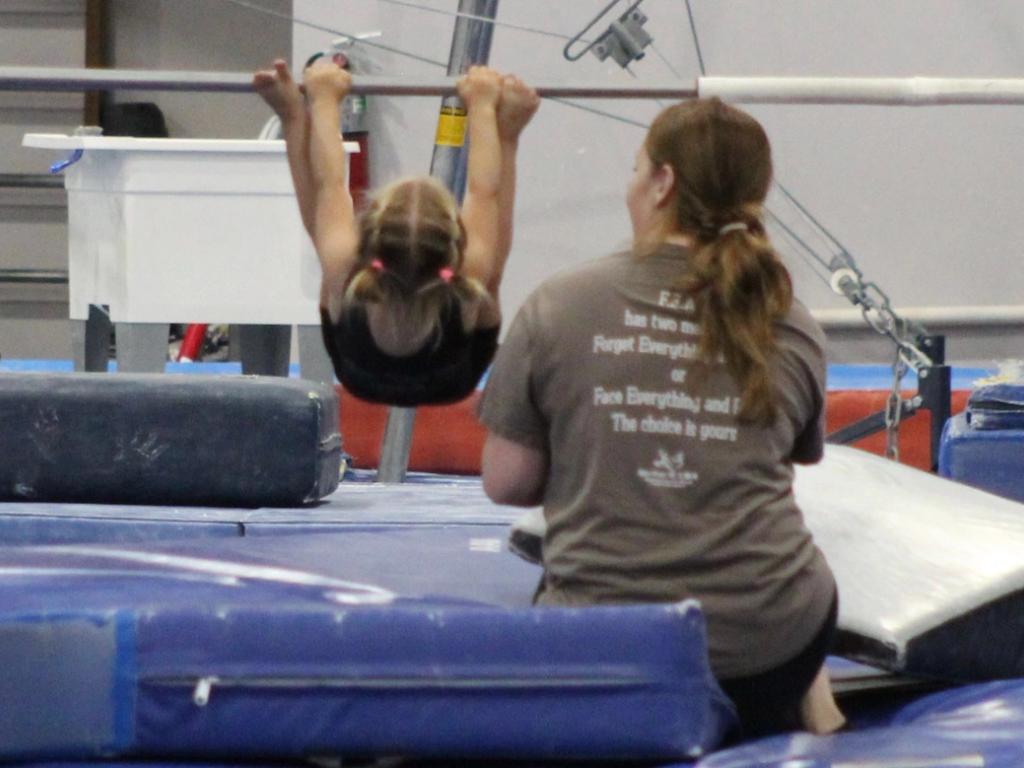
From first steps to the world stage
Every gymnast starts somewhere. Find where your child fits today.
- Start here
Preschool, 14 months to 5 years
- Build skills
Recreational, age 6 and up
- Compete
Teams, by coach invitation or placement
- Where it leads
Not a program, an outcome
Beyond the gym
NCAA programs, Cirque du Soleil, and the World Gymnaestrada stage
Every class, in order
Each class has its own set of skills. When your child has them, their coach moves them to the next one. Tap a class name to see times and prices.
| Class | Ages | What they learn | Next step |
|---|---|---|---|
| Preschool (Adventure Gym) | |||
| My Buddy and Me | 14 to 35 months, with a parent | Moving, climbing and crawling, and feeling safe on the equipment | Jumpstarters at age 3 |
| Jumpstarters | Age 3 | First skills on their own, confidence and listening | Firecrackers at age 4 |
| Firecrackers | Age 4 | Skills on the gymnastics events, strength and coordination | Fun Flippers Jr. or Gym Studs Jr. |
| Fun Flippers Jr. & Gym Studs Jr. | Ages 4 to 5, with instructor approval | Harder preschool skills that lead into the big-kid classes | Girls or Boys Recreational at age 6 |
| Girls Recreational (ages 6 to 14) | |||
| Fun Flippers | Age 6 and up · 80 min | Body shapes, cartwheels and bridges | High Rollers |
| High Rollers | Advanced beginner · 110 min | Handstands, round-offs, back hip circles and strength | Twisters |
| Twisters | Intermediate · 2 hours | Backbends, bar skills and the steps to a back handspring | Advanced classes, or Xcel Bronze to start competing |
| Boys Recreational (age 6 and up) | |||
| Gym Studs | Age 6 and up · 80 min | The basics on all six men’s events | Super Studs |
| Super Studs | Intermediate · 110 min | Strength, and cleaner basic skills on every event | Advanced Super Studs |
| Advanced Super Studs | Advanced · 120 min | Polishing skills and learning harder ones | The Perfector Boys Team, by coach invitation |
| Trampoline & Tumbling | |||
| TNT Beginner | Age 6 and up · 55 min | Forward and backward rolls, cartwheels, body shapes and safe landings | TNT Intermediate |
| TNT Intermediate | Age 7 and up · 80 min | Round-offs, back handsprings and standing back handsprings | TNT Advanced, by invitation |
| TNT Advanced | Age 9 and up, by invitation · 90 min | Front and back tucks, twists and advanced trampoline | Keep building, or add a team |
| Competitive teams | |||
| Xcel (Bronze to Sapphire) | Girls; Bronze starts as a class with the option to compete | Routines built around each gymnast’s skills, moving up through Bronze, Silver, Gold, Platinum, Diamond and Sapphire | The next Xcel division as skills grow |
| Perfector Girls Team | Levels 5 to Elite, by coach invitation | Optional routines judged on difficulty, execution and composition | Level 10 and Elite |
| Perfector Boys Team | Levels 3 to Elite, by coach invitation | Set routines at Levels 3 to 5, then optional routines at Levels 6 to 10 | Elite, college (NCAA) teams and performing arts |
Preschool (Adventure Gym)
14 to 35 months, with a parent
What they learn: Moving, climbing and crawling, and feeling safe on the equipment
Next step: Jumpstarters at age 3
Age 3
What they learn: First skills on their own, confidence and listening
Next step: Firecrackers at age 4
Age 4
What they learn: Skills on the gymnastics events, strength and coordination
Next step: Fun Flippers Jr. or Gym Studs Jr.
Ages 4 to 5, with instructor approval
What they learn: Harder preschool skills that lead into the big-kid classes
Next step: Girls or Boys Recreational at age 6
Girls Recreational (ages 6 to 14)
Age 6 and up · 80 min
What they learn: Body shapes, cartwheels and bridges
Next step: High Rollers
Advanced beginner · 110 min
What they learn: Handstands, round-offs, back hip circles and strength
Next step: Twisters
Intermediate · 2 hours
What they learn: Backbends, bar skills and the steps to a back handspring
Next step: Advanced classes, or Xcel Bronze to start competing
Boys Recreational (age 6 and up)
Age 6 and up · 80 min
What they learn: The basics on all six men’s events
Next step: Super Studs
Intermediate · 110 min
What they learn: Strength, and cleaner basic skills on every event
Next step: Advanced Super Studs
Advanced · 120 min
What they learn: Polishing skills and learning harder ones
Next step: The Perfector Boys Team, by coach invitation
Trampoline & Tumbling
Age 6 and up · 55 min
What they learn: Forward and backward rolls, cartwheels, body shapes and safe landings
Next step: TNT Intermediate
Age 7 and up · 80 min
What they learn: Round-offs, back handsprings and standing back handsprings
Next step: TNT Advanced, by invitation
Age 9 and up, by invitation · 90 min
What they learn: Front and back tucks, twists and advanced trampoline
Next step: Keep building, or add a team
Competitive teams
Girls; Bronze starts as a class with the option to compete
What they learn: Routines built around each gymnast’s skills, moving up through Bronze, Silver, Gold, Platinum, Diamond and Sapphire
Next step: The next Xcel division as skills grow
Levels 5 to Elite, by coach invitation
What they learn: Optional routines judged on difficulty, execution and composition
Next step: Level 10 and Elite
Levels 3 to Elite, by coach invitation
What they learn: Set routines at Levels 3 to 5, then optional routines at Levels 6 to 10
Next step: Elite, college (NCAA) teams and performing arts
Age and skill requirements for each competitive level are set by USA Gymnastics.
How kids move up
Start where they fit
Book a free class. Coaches place your child by age and experience, and kids coming from another gym get an evaluation.
Learn that class’s skills
Every class has a clear list of skills, so you always know what your child is working on next.
Move up when ready
When the coach sees they are ready, they recommend the next class. Advanced classes and team spots are by coach invitation.
There is no set timeline. Kids move up when their skills are ready, not on a fixed schedule.
Xcel vs. Development (JO)
Both are USA Gymnastics competitive programs, and Go For It USA runs both. Here is how they differ.
| Xcel | Development Program (JO) | |
|---|---|---|
| Who it’s for | Girls who want to compete with a more flexible commitment | Gymnasts aiming for the highest levels: Level 10, Elite and college teams |
| Levels | Bronze, Silver, Gold, Platinum, Diamond and Sapphire | Levels 1 to 10, then Elite. Our girls team competes Levels 5 to Elite; our boys team Levels 3 to Elite |
| Routines | Built around each gymnast’s own skills, within each division’s rules | Lower levels perform the same set routines; higher levels perform their own routines, judged on difficulty, execution and composition |
| How to join here | Start at Bronze, which begins as a recreational class with the option to compete | By coach invitation, once your gymnast meets the age and skill requirements for the level |
Girls who want to compete with a more flexible commitment
Development Program (JO): Gymnasts aiming for the highest levels: Level 10, Elite and college teams
Bronze, Silver, Gold, Platinum, Diamond and Sapphire
Development Program (JO): Levels 1 to 10, then Elite. Our girls team competes Levels 5 to Elite; our boys team Levels 3 to Elite
Built around each gymnast’s own skills, within each division’s rules
Development Program (JO): Lower levels perform the same set routines; higher levels perform their own routines, judged on difficulty, execution and composition
Start at Bronze, which begins as a recreational class with the option to compete
Development Program (JO): By coach invitation, once your gymnast meets the age and skill requirements for the level
USA Gymnastics now calls the Junior Olympic (JO) program the Development Program. Many families still say JO.
Questions parents ask
Start with age. Under 3s join My Buddy and Me with a parent, 3 to 5 year olds join the preschool class for their age, and kids 6 and up start in the beginner recreational class unless they already have experience.
The easiest way to be sure is a free class: our coaches will see your child move and place them in the right level. Coming from another gym? We’ll make it an evaluation.
Both are USA Gymnastics competitive programs. Xcel has a more flexible commitment and routines built around each gymnast’s skills, from Bronze to Sapphire. The Development Program, still often called JO, runs from Level 1 to Level 10 and Elite, and is the usual route to college gymnastics.
Each class has its own list of skills. When your child’s coach sees they have them, the coach recommends the next class. Advanced classes like TNT Advanced, and spots on our teams, are by coach invitation.
Yes. Girls can move from Twisters into Xcel Bronze, which starts as a recreational class with the option to compete. Our Perfector Girls and Boys Teams are by coach invitation.
Not at all. Girls Recreational runs to age 14, Boys Recreational from age 6 up, and Trampoline & Tumbling suits older beginners. Teens 13 to 18 can also come to Friday open gym.
Not sure where your child fits?
Book a free class and our coaches will place them at the right level.